



How to Choose the Right Container House for Your Project
Container homes have transformed greatly from just simple cabins on the building site. Nowadays, they are used as worker dorms, site offices, permanent family homes, schools, commercial buildings, and even resort cabins which have been effectively implemented in over 50 countries for varied projects of all kinds and sizes.
Yet, container homes are not all designed for the same use. Purchasing an unsuitable one might cause the budget to be exceeded, result in a lack of space, make transportation and storage difficult, and lead to poor long-term performance. A structure which is ideal for a mining camp in Brazil is a totally different product from a home a family in the UAE can expand needs.
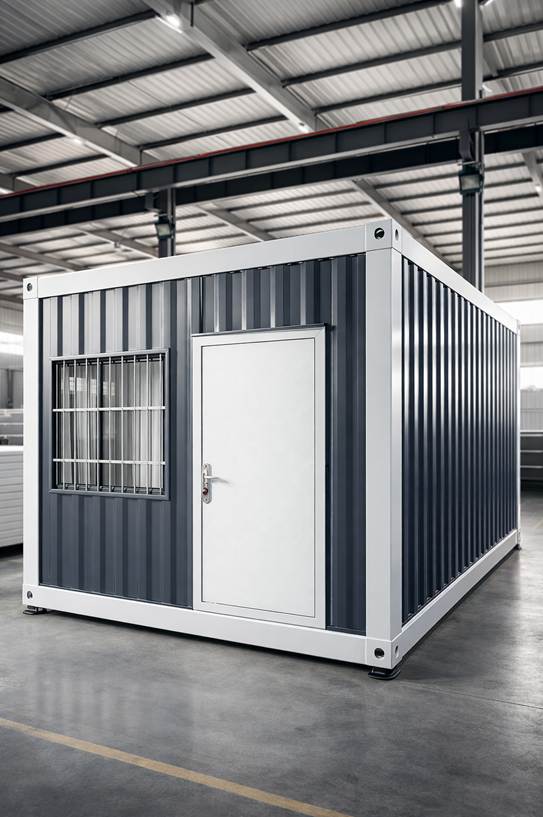
This step-by-step explanation hopes to help you understand the major factors involved in choosing a container house so that you can be sure of getting value from your investment right from the beginning.
Step 1 – Define Your Project Purpose
The very first and most crucial thing to decide is what this building is going to be used for. The right product type, size, insulation specification, and layout will be determined by this answer even before considering any other factors.
Worker Accommodation
Big Construction, Mining, Oil and Gas, and Infrastructure projects that are spread over several locations require workers' housing that is quick, economical, and accessible even in remote areas. For these types of projects, a Flat Pack Container House or a Modular Dormitory Building is generally the right option.
Major considerations in this case are the number of people a unit can accommodate, the unit cost when producing many, and the speed of the installation since these could be in locations with a shortage of local workers. ZN House's flat pack dormitory solutions are built to be shipped, taking up the least amount of space and then assembled by only a few people. So, these are a very good fit for remote camp environments.
Site Office
Project managers and engineering teams require functional working areas, conference spaces, and sometimes multi-level layouts - all of these need to be swiftly set up and have the ability to move them when the project changes location. A Flat Pack Office Container or Double-Storey Modular Office can provide an answer to these needs.
Specification of a site office is mainly determined by the quality of the work area, layout of the meeting space, and the ability to move the office.
Residential Living
Project managers and engineering teams require functional working areas, conference spaces, and sometimes multi-level layouts - all of these need to be swiftly set up and the ability to move them when the project changes location. A Flat Pack Office Container or Double-Storey Modular Office can provide an answer to these needs.
Specification of a site office is mainly determined by the quality of the work area, layout of the meeting space, and the ability to move the office.
Commercial Projects
Retail shops, cafes, pop-up stores, and commercial complexes need a different kind of focus: their outward appearance, the experience they provide to customers, and the ability to change or increase the layout when needed. A Modular Commercial Building or Container Shop is a great match for these needs, as they can be made with different face options, layout arrangements, and smart system installations that can be carried out upon the customer's request.
Step 2 – Choose the Right Container House Type
Once you realize what it’s for, the type of product is more obvious. The three main categories in the market address very different needs.
Flat Pack Container House
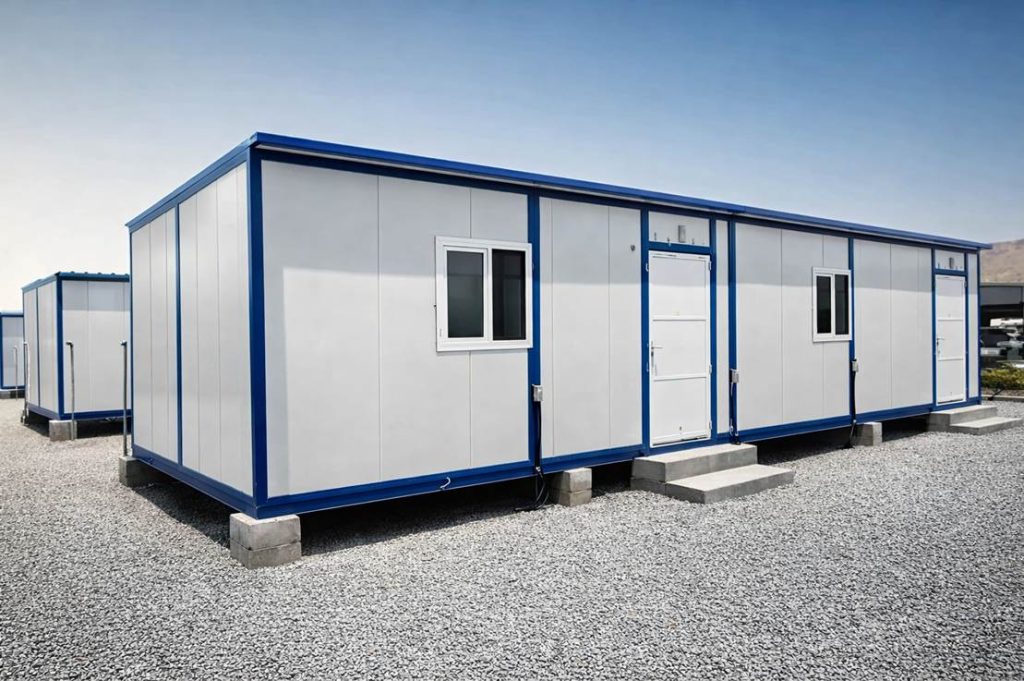
Flat pack solutions are by far, the most popular choice for projects needing a high volume, rapid installation, and/ or transferring the location several times. After factory-tested panels are fabricated, they are disassembled, packed flat, and shipped in the most efficient way. Assembly happens at the location and is usually completed within a couple of days.
Best for: Dormitories, offices, schools, site camps
Key advantages: Lower transportation cost per unit, rapid assembly, easy expansion by adding modules
Expandable Container House
Expandable container houses are shipped in a compact form and unfold on the site to reveal a much larger interior - usually 2-3 times the area of the transport configuration. They need very little assembly and can be ready for living in a matter of hours.
Best for: Residential use, vacation homes, tiny houses, emergency deployment
Key advantages: Larger interior space relative to shipping volume, modern appearance, the fastest deployment timeline of any container house type
Modular Container Building
Modular construction offers the scalable solution for hotels, apartment buildings, large offices, or any other multi-floor projects with complex layouts, which single-unit products simply cannot offer. Individual modules are built exactly to the specifications and then stacked or connected on site.
Best for: Hotels, apartments, commercial complexes, large educational facilities
Key advantages: Multi-story capability, flexible layout combinations, suitable for large-scale or permanent installations
Step 3 – Determine the Required Size
Container houses are most often built on 20ft and 40ft footprints with multi-module configurations for larger projects.
20ft Container House
A 20ft unit (approximately 14–16 m² of usable interior space) would be the ideal size for one-person lodging, a security post, a small on-site office, storage rooms combined with a small office space, or tight cabins.
Suitable for: Single offices, security rooms, small cabins, individual accommodation units
40ft Container House
The most flexible size is a 40ft unit (approximately 30-33 m2 of usable interior space), which can be converted into multi-person dormitory rooms, family housing, classroom spaces and functional office environments.
Suitable for: Family housing, 4–6 person dormitories, classrooms, larger offices
Multi-Module Buildings
For the hospitality industry, housing towers, or extensive workforce centers, several units are mixed by both horizontal and vertical layouts. If a project needs 200 lodging beds, it will usually be set up as a multi-storey modular structure with standard modules stacked and interlinked as per the master plan.
Suitable for: Hotels, apartment projects, large offices, schools, hospital or clinic facilities
Step 4 – Consider Local Climate Conditions
People often ignore climate when purchasing a product, and this is one of the most important features you can get wrong. Selecting the wrong type of insulation for your house will mean running up your energy bills, not being able to enjoy your home comfortably and possibly even finding structural issues after a while in very hot or cold situations.
Hot Climate Regions (Middle East, Africa, Southeast Asia)
In high-temperature situations, the heat the thermal element should avoid is the one that comes from outside, not the one that stays inside. PU (polyurethane) insulation boards, reflective roofs, and proper cross-ventilation are commonly used specifications. Besides, radiant barriers and light-coloured exteriors also help to minimize solar heat intake.
Cold Climate Regions (Central Asia, Northern Europe, Canada, High-Altitude Sites)
In cold climates, it is necessary to use rock wool insulation panels typically 75 mm to 100 mm thick and additional measures to prevent thermal bridging at joints and connections. ZN House projects in northern areas have shown that their designs can keep indoor temperature at about 20°C even when outdoor temperature is as low as -35°C.
Coastal Areas
Steel corrodes much faster due to the salt content in the air and high humidity in case the structure is not properly protected. The normal provision for a coastal installation is a galvanized steel frame and an anti-corrosion surface treatment and marine-grade fasteners. This is true for works in the Pacific Islands, coastal Africa, the Caribbean, and other locations with similar environmental conditions.
Step 5 – Evaluate Transportation and Installation Requirements
The length of the factory-to-project-site distance, the state of the access roads and the provision of crane equipment are the factors that determine the type of container house that is feasible - and what the real cost of delivery will be.
Questions to clarify before ordering:
- How far is the project site from the nearest port or road access point?
- Is crane access available on site, or will a mobile crane need to be mobilized?
- Are road width, bridge weight limits, or port infrastructure constraints relevant?
- Is the installation crew local, or will a technical team need to travel to site?
Flat Pack Houses are extremely efficient for shipping and handling logistics. Their panels being flat form the greatest number of units per a single container and That's why freight cost per room reaches the absolute minimum. Also, they can be off-loaded and moved using very basic equipment; besides, a small trained crew can assemble a house very quickly, even within a day.
Expandable Houses arrive on site pre-assembled in a compact form but unfold to a sizeable footprint which means that the transport volume per unit is higher. They need less labor for installation but require more space for unloading and deployment.
Modular Buildings consist of larger, heavier modules that need to be lifted by cranes for stacking. Such buildings are excellent for locations having proper road access and a crane.
Step 6 – Consider Future Expansion
Many projects expand in size and complexity over time; that is hardly predictable when they are just started, for example: A work camp for the labourers that is put up for 50 people initially may be able to accommodate 200. A school that is launched with only four classrooms may double its capacity within three years by adding four more. A commercial building that is initially designed as a single-storey may be extended to two-stories later on.
Questions to ask before finalizing the specification:
- Will additional rooms or units be required as the project scales?
- Will staff numbers or resident population increase?
- Is the site layout designed to allow additional modules to be added?
- Will future floors or connected buildings need to share structural load with the current units?
Modular container solutions are intended from the ground up for the kind of flexibility and scalability needed here. Since every unit is built to a strict standard, extra units can simply be ordered and connected to a current structure without the need for a structural overhaul. This is a significant practical advantage over traditional building methods, where enlarging the building normally means getting new permits, making new foundations, and the whole construction period again.
Step 7 – Compare Total Project Cost, Not Just House Price
The container house price is just one part of the total cost of the project. Buyers who pay attention to only the unit price may run into unexpected expenses on delivery and installation.
Budget Categories to Include in A Full Cost Assessment
| Cost Category | Description |
| Unit price | Factory cost of the container house, per unit or per m² |
| Shipping and freight | Ocean freight, port handling, inland transport to site |
| Foundation | Concrete footings, piles, or ground preparation |
| On-site installation | Labor, crane hire, connection work |
| Utilities connection | Electrical, water, plumbing hookup |
| Interior finishes | Furniture, flooring, fixtures (if not factory-fitted) |
| Permits and compliance | Local building permits, inspections, certifications |
In some instances, a container home that looks less expensive when you divide the price by the number of units can have a higher freight cost, demand a complicated foundation or need major interior work after delivery. Usually, a better product with a factory-finished look will have a dramatically lower overall cost of installation. Delivering
It is a fact that ZN House achieves an additional level of construction finishing in its units, more than 80%, inside its factories. This approach helps to minimize on-site labor and speeds up opening-to-occupancy time.
Common Mistakes When Choosing a Container House
Choosing Based on Price Alone
Unit price is simply one factor considered when determining the entire cost. Taking into account the expenses of freight, foundation installation, and maintenance for a long duration, the unit price will provide a much more accurate representation of the value.
Ignoring Insulation Requirements
If the insulation you use does not match the climate of the location where the building will be, it will lead to high energy bills and discomfort for the occupants. So, make sure you always check the insulation type and thickness against the temperature range of the location of the project.
Underestimating Future Expansion
Projects not considering growth often have costly and disruptive retrofits. If you build something with a modular system from the beginning, it is easy to expand.
Selecting The Wrong House Type
Deploying an expandable house in a massive labour camp would definitely be both logistically and economically inefficient. The flat pack dormitory unit would most likely be an inappropriate product for a family who wants to buy a house for permanent residence. Because of this, it is very important to make the product type fit the project purpose.
Not Considering Local Regulations
Building codes, zoning laws, and the permitting process vary largely from one country and region to another. Making sure you understand the compliance requirements before placing an order is one way to avoid expensive alterations or waiting time after the delivery.
Which Container House Is Right for You?
| Project Type | Recommended Solution |
| Worker Accommodation | Flat Pack Container House |
| Site Office | Modular Office Building |
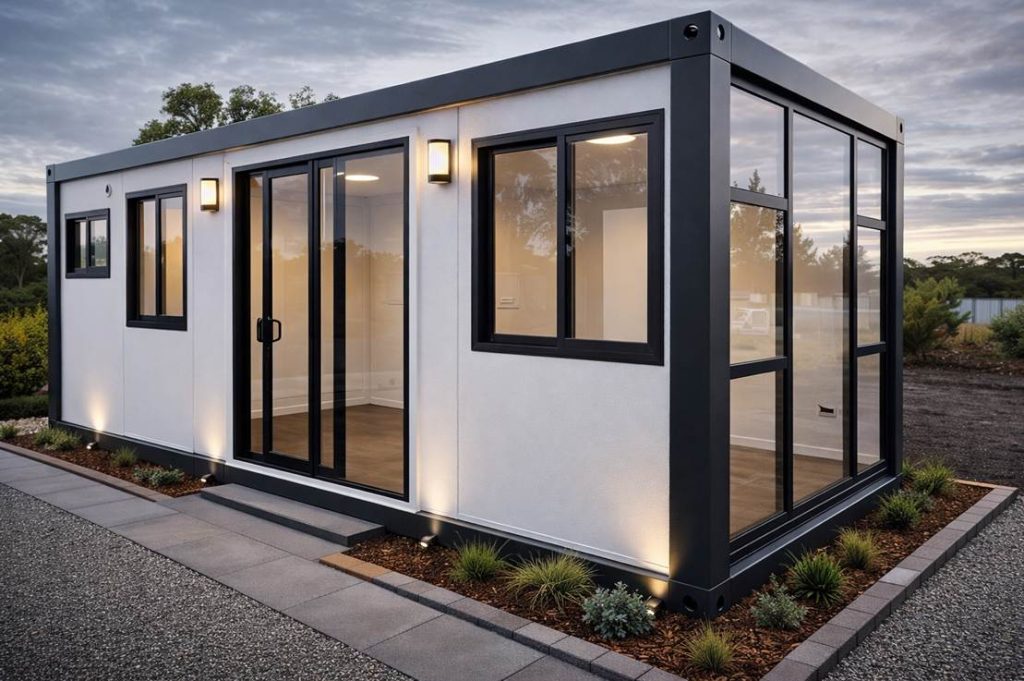
| Residential Living | Expandable Container House |
| Resort Cabin | Flat Pack Tiny House |
| Commercial Building | Modular Container Building |
| School Classroom | Modular Classroom |
| Mining / Remote Camp | Flat Pack Dormitory with Rock Wool insulation |
| Emergency / Disaster Relief | Expandable Container House |
Frequently Asked Questions
What is the best type of container house?
There isn't a single best type; the suitable one depends on what the project is done for, how big a building needs to be, where it is and what kind of transportation is available. For example, flat pack houses are good for very big accommodation and office spaces, expandable houses work well for normal residential buildings and are good for building quickly, modular buildings are great for multi-storey and big commercial projects.
Should I choose a flat pack or expandable container house?
Choose flat pack if you are keen on cost-saving, big quantity, or moving very often. Choose expandable if you want fast single-unit deployment, a bigger interior space, or a house-like feel.
How long does a container house last?
ZN House container homes are built to last for 15-20+ years or longer if maintained properly. The frame of the house, made of galvanized steel, is very resistant to rust, whereas the walls with sandwich panels are able to endure very strong winds, earthquakes, and extreme variations in temperature.
Can a container house be expanded later?
Yes, this is one of the major benefits of modular construction - the ability to expand the building by adding more units either on the side or on top. Vertical expansion of a modular building can be done at any time and even multi-storey layouts can be designed from the beginning with future growth kept in mind.
Are container houses suitable for residential use?
Absolutely. If the insulation specs, the inside arrangement, and the finishing quality are done right, a container home is capable of offering a comfy, energy-saving lifestyle on par with a traditional building a lot of the time it will be 30-50% lower-cost overall.
How much does a container house cost?
Prices range widely according to unit type, size, number, insulation specification, interior finish level, and destination. To determine project costs, obtain a detailed quote for the unit cost, freight, foundation, installation, and utility connections.
Conclusion
Choosing a container house depends on how systematically you figure out the correct variables: project purpose, product type, size, climate, logistics, expansion plans, and total cost. Buyers who take time to analyze these factors instead of just going with the unit price usually come up with better results: quicker deployment, lower overall investment, and buildings that perform well throughout their entire service life.
Over 50 countries have ZN House projects with container homes that have surpassed the number of 2,500, from remote mining camps in South America to residential communities in the Middle East. If you need a single expandable unit or a multi-storey modular complex, the team is able to help you determine the right specification for the conditions of your project.
Explore ZN House Container Home solutions →
Contact ZN House today for a customized quotation.
Similar Posts

Container house price facts every homeowner should knowFolding Container House
Container house price depends on size, design, and location. Learn key cost factors and how container homes compare to traditional housing.
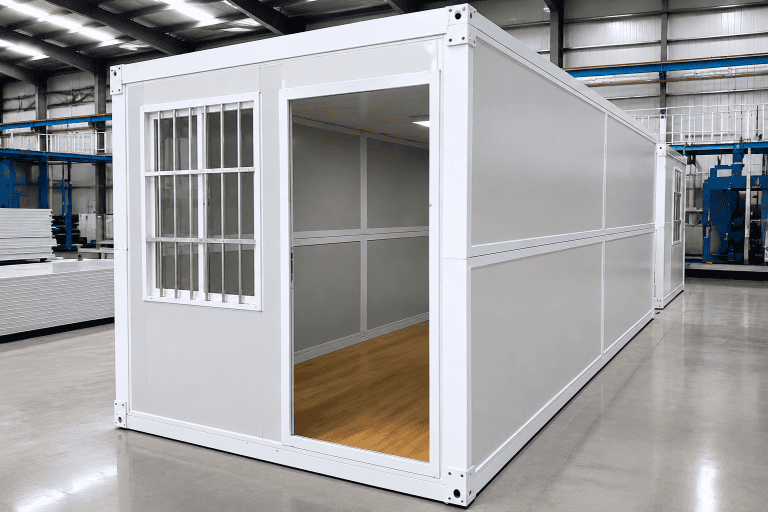
Folding Container House: The Complete Guide to Fast, Portable Modular Living
A folding container house is an innovative prefabricated steel structure that opens on site in minutes...
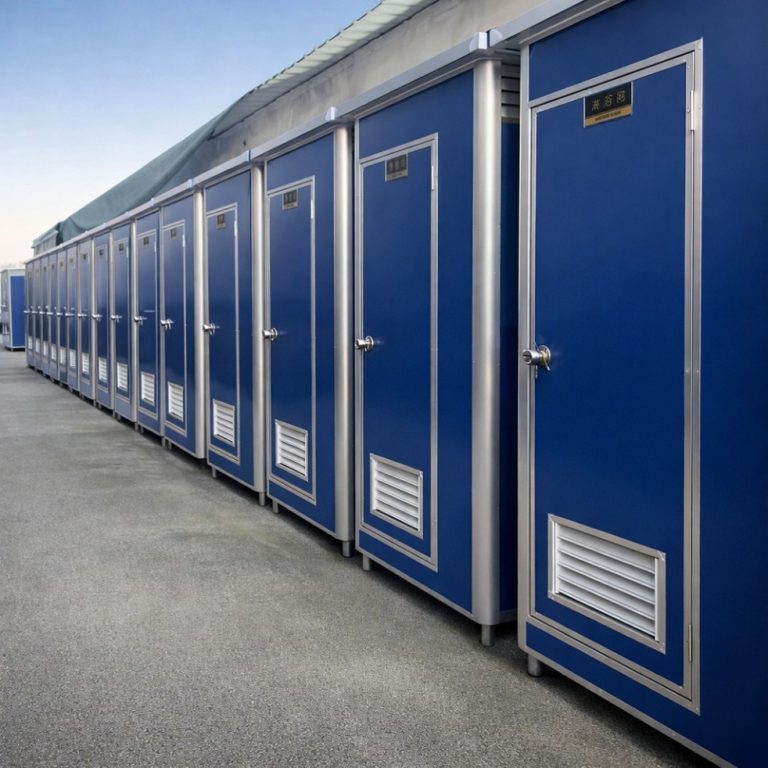
Top Types of Prefabricated Restrooms for Construction Sites, Camps, Schools, and Public Projects
At the end of the day, every new construction site, work camp, school or community center...
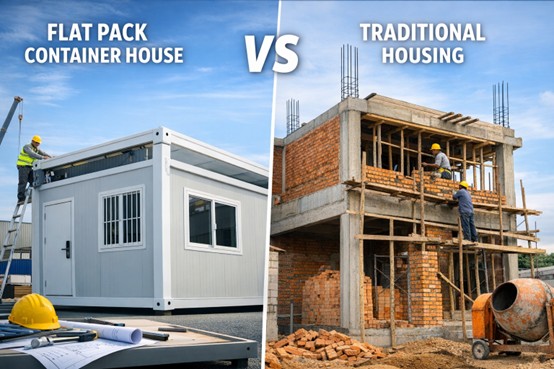
Flat Pack Container Houses vs. Traditional Housing: What's the Real Difference?
Introduction Increasingly, modern construction projects require building systems that can respond to the changes based on...
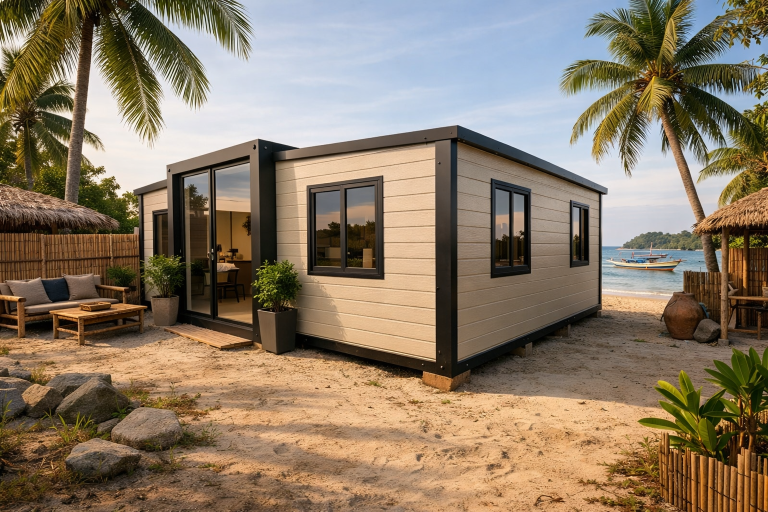
Where to Buy a Container House in the Philippines? Cost, Benefits & Complete Buying Guide
If you want to buy a container home in the Philippines but aren't sure how to...
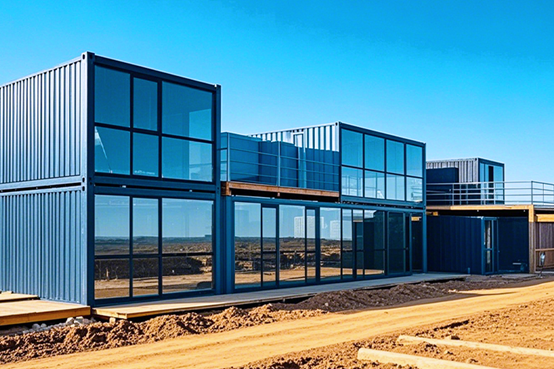
The Evolution of Prefab Steel Container Housing
Modern construction is evolving. For a long time, brick and mortar were the only options for...


